
Lithium Battery Safety Procedures
|
|
|
Lithium Battery Safety Procedures |
|
Grid Scale Storage Publications Search
Search Lithium Fire Publications search was updated real-time via Filemaker on:
Search Lithium Fire Publications | Return to Search ListSearch Completed | Title | Lithium Battery Safety Procedures
Original File Name Searched: rvws-lithium-battery-safety-procedures.pdf | Google It | Yahoo | Bing
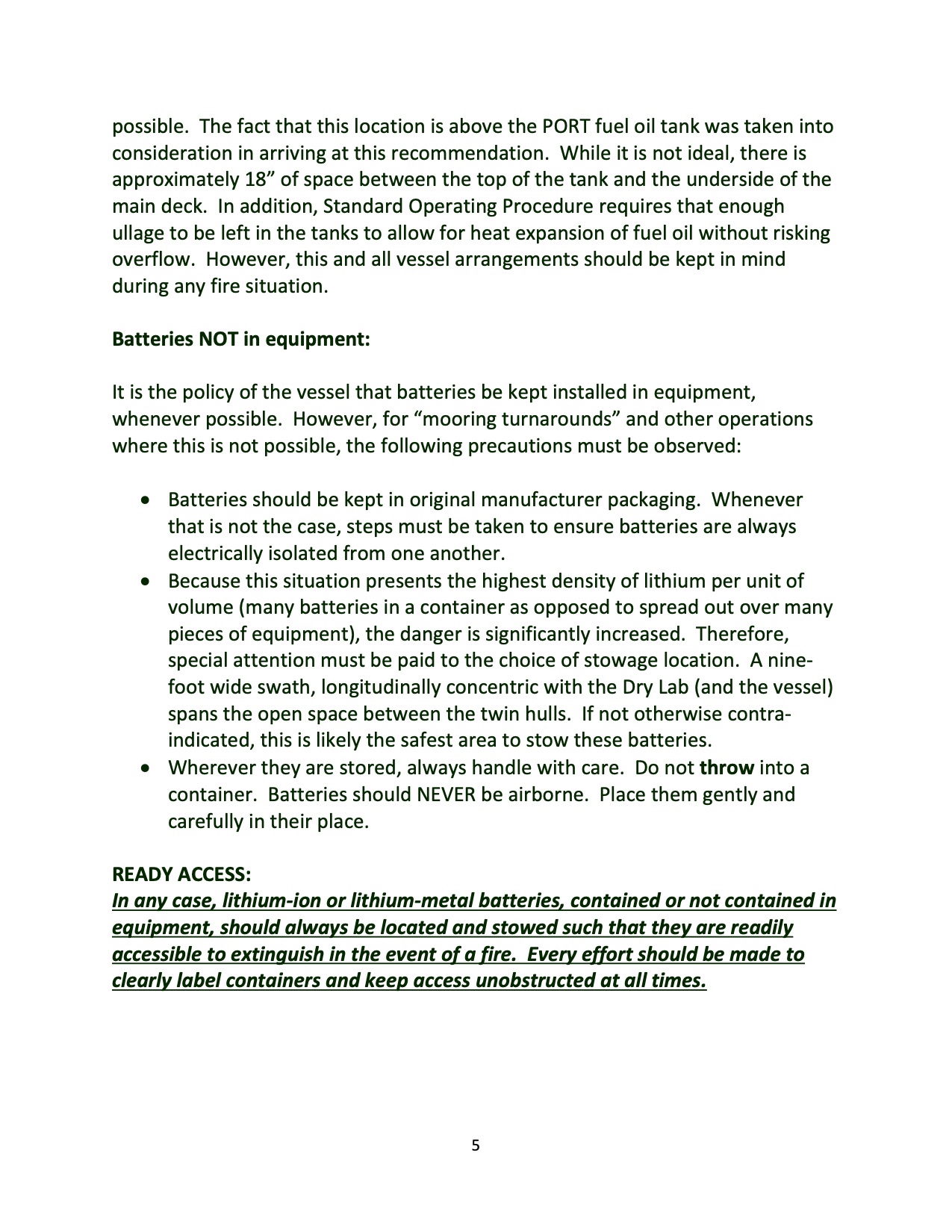 Page | 005 possible. The fact that this location is above the PORT fuel oil tank was taken into consideration in arriving at this recommendation. While it is not ideal, there is approximately 18” of space between the top of the tank and the underside of the main deck. In addition, Standard Operating Procedure requires that enough ullage to be left in the tanks to allow for heat expansion of fuel oil without risking overflow. However, this and all vessel arrangements should be kept in mind during any fire situation. |
Search Contact: greg@infinityturbine.com