
INFINITY TURBINE LLC We specialize in designs, plans, licensing, consulting, design services, and surplus spare parts. We no longer manufacture turbines or CO2 systems. More Info...
Please email for first contact with request for more information
Email: greg@infinityturbine.com
CO2 Ejectors for Data Center Waste Heat Cooling: A Technical Review Hyperscalers are racing to deploy gigawatts of AI compute, but the grid can't keep up and large gas turbines are backordered half a decade out. Infinity Turbine's Cluster Mesh Supercritical CO₂ system offers a radical alternative: modular, silent, trailer-deployable prime power that scales the way software does... More Info
From the Feher Cycle to the Cluster Mesh: A History of Supercritical CO₂ Power... More Info
Cooling a Data Center Pod with Its Own Waste Heat: A 100 kW Ejector Design Study More Info
Portable Gas Turbine Prime Power More Info
Cluster Mesh Supercritical CO2 Power System for Data Centers and AI Pairing Cluster Mesh Supercritical CO2 Power System with Small Modular Reactors enables hyperscalers to convert high-grade nuclear heat into ultra-efficient, dispatchable power with a compact, modular footprint tailored for AI-scale demand. More Info
ORC and Products Index Infinity Turbine ORC Index... More Info
AMD Helios Cooling Strategy Using Transcritical CO2 and a Cluster Mesh sCO2 Turbine Generator Cell More Info
|
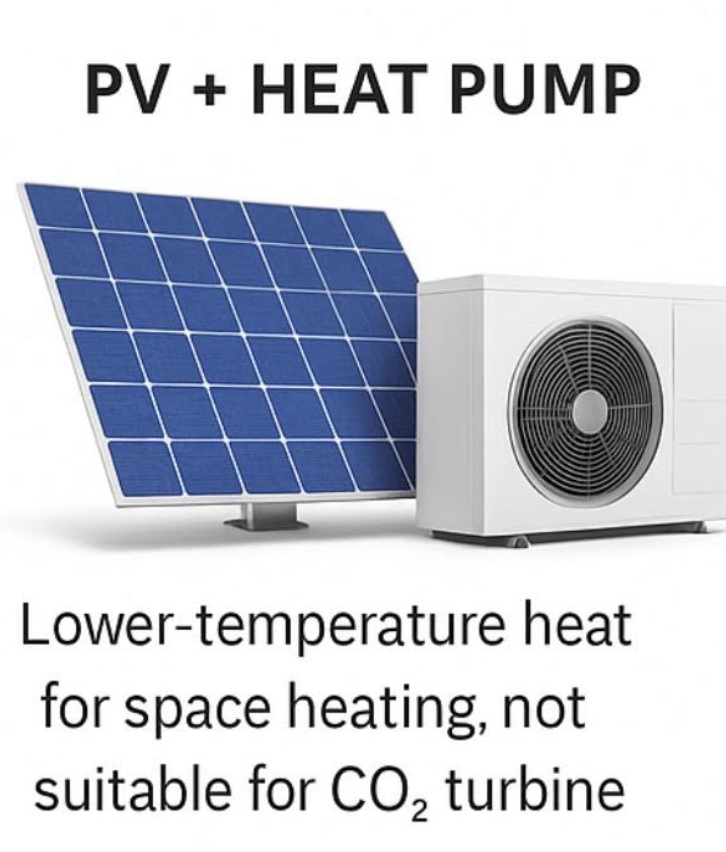
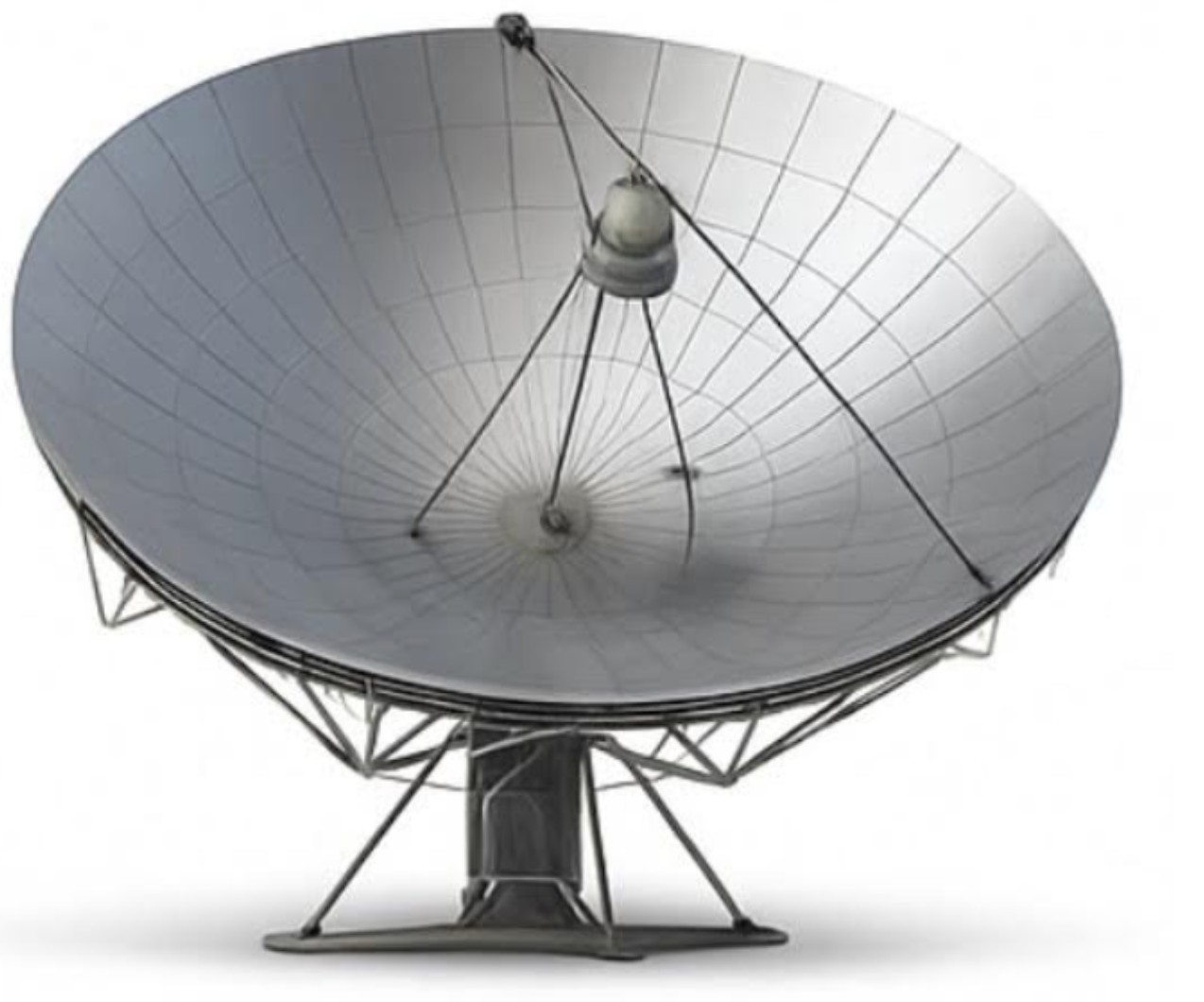
Solar PV and Heat Pump vs. Concentrated Solar Thermal CSP OverviewSupercritical carbon dioxide (sCO₂) turbine generators are a new class of compact, high-efficiency systems that convert heat into electricity using CO₂ as the working fluid. These turbines require a high-temperature heat source, typically ranging from 300 to 700 degrees Celsius. The challenge is identifying which solar-based system—solar PV combined with a heat pump or concentrated solar thermal—can deliver the most suitable and efficient heat for the sCO₂ cycle.This article compares both methods for one square meter of sunlight at midday under clear-sky conditions and assesses which produces higher-quality thermal energy and greater total power output.1. The Two Solar ApproachesA. Solar PV + Heat PumpIn this configuration, a solar photovoltaic panel converts sunlight directly into electricity. The generated electricity powers a heat pump that transfers heat from ambient air or a secondary loop into a storage or process fluid.Modern PV panels operate with efficiencies of about 20 to 22 percent. Heat pumps, depending on temperature lift, can have coefficients of performance (COP) between 3 and 6 for moderate temperature differentials. The result is a large quantity of low• to medium-temperature heat (generally below 100 degrees Celsius).While this system is excellent for building heating and low-temperature applications, it does not generate the high-grade heat required for a supercritical CO₂ turbine. Even though the overall energy capture is high, the heat quality is too low to reach turbine inlet conditions.B. Concentrated Solar Thermal (CSP)Concentrated solar systems use mirrors or lenses to focus sunlight onto a receiver, achieving temperatures from 300 up to 700 degrees Celsius or higher. The thermal energy can then be used directly to heat a working fluid such as molten salt, pressurized CO₂, or air, which drives a turbine or generator.For sCO₂ turbines, CSP is almost ideal. The concentrated heat provides the required temperature and energy density to bring CO₂ into the supercritical region—typically above 31 degrees Celsius and 74 bar, but operating much higher in practical turbine systems.Even though CSP efficiency per square meter may be lower due to optical and thermal losses, the resulting heat is high-quality thermal energy suitable for direct mechanical or electrical generation.2. Quality of Heat Comparison• PV + Heat Pump System:Produces heat that is relatively low in temperature (below 100 degrees Celsius). This level of heat is valuable for space heating or water heating but cannot efficiently drive a thermodynamic cycle like sCO₂. Any attempt to upgrade this heat to turbine inlet temperatures would require additional compression or resistive heating, reducing efficiency.• Concentrated Solar Thermal System:Produces high-temperature heat suitable for direct coupling to a sCO₂ turbine or intermediate thermal storage. The heat quality matches the turbine’s thermodynamic requirements, enabling efficient power conversion.Therefore, when evaluating heat quality for sCO₂ turbine integration, CSP provides the superior temperature range and energy density.3. Electrical Output Potential• PV + Heat Pump Pathway:A PV panel can generate approximately 0.20 to 0.22 kilowatt-hours of electricity per square meter per hour under full sun. This power can directly feed the grid or support auxiliary loads. However, when this energy is diverted to a heat pump, it produces thermal energy, not mechanical shaft power. To drive an sCO₂ turbine, the low-grade heat must first be raised to high temperatures, requiring further conversion steps and electrical input. As a result, the total round-trip efficiency from sunlight to sCO₂ turbine output is low.• CSP Pathway:Concentrated solar delivers roughly one kilowatt-hour of solar input per square meter per hour, but after losses, about 0.5 to 0.7 kilowatt-hours of usable high-temperature heat remain. When this heat is converted through an sCO₂ turbine (with typical thermal-to-electric efficiency between 25 and 45 percent, depending on inlet temperature and cycle design), the result is approximately 0.15 to 0.3 kilowatt-hours of electricity per square meter per hour.Although CSP may capture fewer total kilowatt-hours than PV + heat pump, the usable thermal quality and direct conversion to mechanical power make it far more efficient for running a supercritical CO₂ turbine.4. System Efficiency and Integration Considerations• PV + Heat Pump Advantages:• Higher total energy capture per square meter for low-temperature applications.• Modular, scalable, and simple to install on rooftops or distributed sites.• Ideal for residential or industrial heating, not for power turbine input.• CSP Advantages:• Provides the exact temperature range needed for sCO₂ turbines.• Can integrate with molten-salt thermal storage for continuous generation.• Offers a direct solar-to-electric conversion pathway with fewer steps.• Hybrid Possibility:A combined approach could use PV panels for electrical generation and CSP for high-temperature turbine operation. The PV system could power compressors, pumps, or control systems within the sCO₂ loop, maximizing total efficiency.5. ConclusionWhen evaluating which solar approach provides better-quality heat and more electricity for a supercritical CO₂ turbine generator, the clear winner is Concentrated Solar Thermal (CSP).While PV plus heat pump systems excel in capturing total energy and providing efficient low-temperature heat, they cannot supply the high thermal quality needed for sCO₂ turbine operation without significant energy losses in conversion.CSP, on the other hand, delivers direct, high-temperature thermal energy capable of efficiently driving the sCO₂ turbine cycle and producing substantially more electricity per square meter of collector area.For high-efficiency solar-to-electric systems based on supercritical CO₂ turbines, concentrated solar remains the superior choice. |
|
|
| CONTACT Email: greg@infinityturbine.com | AMP | PDF |