
INFINITY TURBINE LLC We specialize in designs, plans, licensing, consulting, design services, and surplus spare parts. We no longer manufacture turbines or CO2 systems. More Info...
Please email for first contact with request for more information
Email: greg@infinityturbine.com
Infinity Turbine CO2 Turbine Development and Testing Cart Supercritical CO2 Turbine Development Cart using high pressure filter canisters for rapid prototyping and commercialization for 1-25 kWh Power Generation... More Info
ORC and sCO2 Performance Charts: R134a, R245fa, CO2 – 2026 Edition Updated 2026 edition of Infinity Turbine’s ORC and supercritical CO2 performance curves: R134a, R245fa and CO2 charts, CO2 heat-rate tables from 100 to 700 °C, sCO2 turbine types, and data-center applications. 62-page PDF... More Info
Supercritical CO2 Turbine Generator Plans (Transcritical) Rankine Cycle Lab format for development ... More Info
Matra Concentrated Solar Project Using Infinity Turbine Generator for Power Production Solar thermal power production using a reflective dish concentrator... More Info
Cluster Mesh Supercritical CO2 Power System for Data Centers and AI Pairing Cluster Mesh Supercritical CO2 Power System with Small Modular Reactors enables hyperscalers to convert high-grade nuclear heat into ultra-efficient, dispatchable power with a compact, modular footprint tailored for AI-scale demand. More Info
ORC and Products Index Infinity Turbine ORC Index... More Info
A Generator Without Magnets Switched Reluctance is the simplest rotating electrical machine there is: a rotor of stacked steel laminations with salient teeth, and a stator carrying concentrated coils. The rotor has no magnets, no windings, no bars and no slip rings... More Info
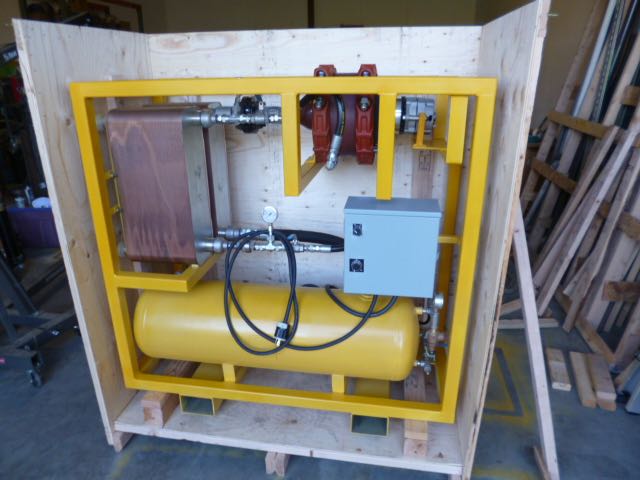
IT10 kW System |
IT10 kW ORC System Waste Heat Power: For years we’ve been hearing requests from customers who would like to use their waste heat to generate power, both on land and marine applications. To meet that demand, we formed Infinity Turbine LLC in 2008 and developed the IT10, the worlds first production 10 kw ORC (Organic Rankine Cycle) waste heat to power generator. New developments in CO2 Brayton Cycle may allow efficiencies to reach 30-50 percent, but only for high grade heat (way above 300 F). This is a huge increase from the legacy ORC process which has a system efficiency (bottoming cycle) of 5-15 percent). We now offer a CO2 Turbine Development Platform for educators and energy developers.IT10 Revenue based on gross sales or grid savings, not including cost of acquiring waste heat flow or pumps.Revenue from IT10 (24 hours x 365 days per year x 10 kWh = 87,600 kWh per year):at $.20 per kWh = $17,520 USD per yearat $.40 per kWh = $35,040 USD per yearat $.80 per kWh = $70,080 USD per year |

IT10 kW System Turbine |
Value: The value in waste heat to power is that it’s a free energy source. The advantages are fuel, or electrical savings, but also displaces fossil fuel electrical production, and hence, reduces CO2 emissions. If you have to pay for your heat source, then ORC doesn’t make economic sense. If you have high-grade heat, consider a topping cycle (Brayton Cycle using CO2).
|

IT10 kW System Turbine |
Efficiency: The real question to ask is whether or not deploying a ORC power generator is a financially wise decision. Because you are utilizing low grade heat, your efficiency will be low (between 3-8 percent). Consider a solid state 20 percent efficiency solar PV panel instead. Utilizing low grade heat only makes sense in the following circumstances:1. High price grid or stand-alone power. The break-even in many cases is about $.20 / kwh. If you have to pay for diesel of propane to fire your generator, finding other methods of generating power are worth seeking.2. Remote or island based power generation. 3. 24 hour supply of waste heat. Keep in mind that harvesting that heat may cost money and resources.
|

IT10 kW System Turbine Crated |
Advantages: The advantages may go much further than cost savings. Waste heat can now be used to produce rotary shaft horsepower, to spin a generator, a pump, or without any moving parts, to generate static electricity. The heat can be used many times, including CHP applications such as chillers, desalination, CO2 harvesting from the ocean (via off-the-shelf membranes), and CO2 Fluid Extraction machines (which can be used for extracting oil from botanicals, regenerating catalysts, and methanol or other alcohol production via the use of catalysts).
|

ITmini Supercritical CO2 High Pressure System |
CO2: Infinity Turbine LLC already develops ORC green energy systems and is developing CO2 energy modules (in high temperatures can be over 40 percent efficient in the Brayton Cycle). Infinity is seeking funding to further this development. Until we get funding, we’ll continue to develop the CO2 Rankine cycle.
|

ITmini Supercritical CO2 High Pressure System |
Triboelectric Effect: Infinity Turbine is also working on some new remarkable technology called TriboElectric Effect. Currently we have a patent-pending oil separation device that is used in the CO2 Fluid Extraction industry. Commonly referred to as electrostatic precipitation, Infinity discovered a way to passively generate static charge using CO2. This helps to apply a static charge to entrained oil in a gas, which allows it to adhere to the first thing it comes in contact with (collection/filter vessel).
|
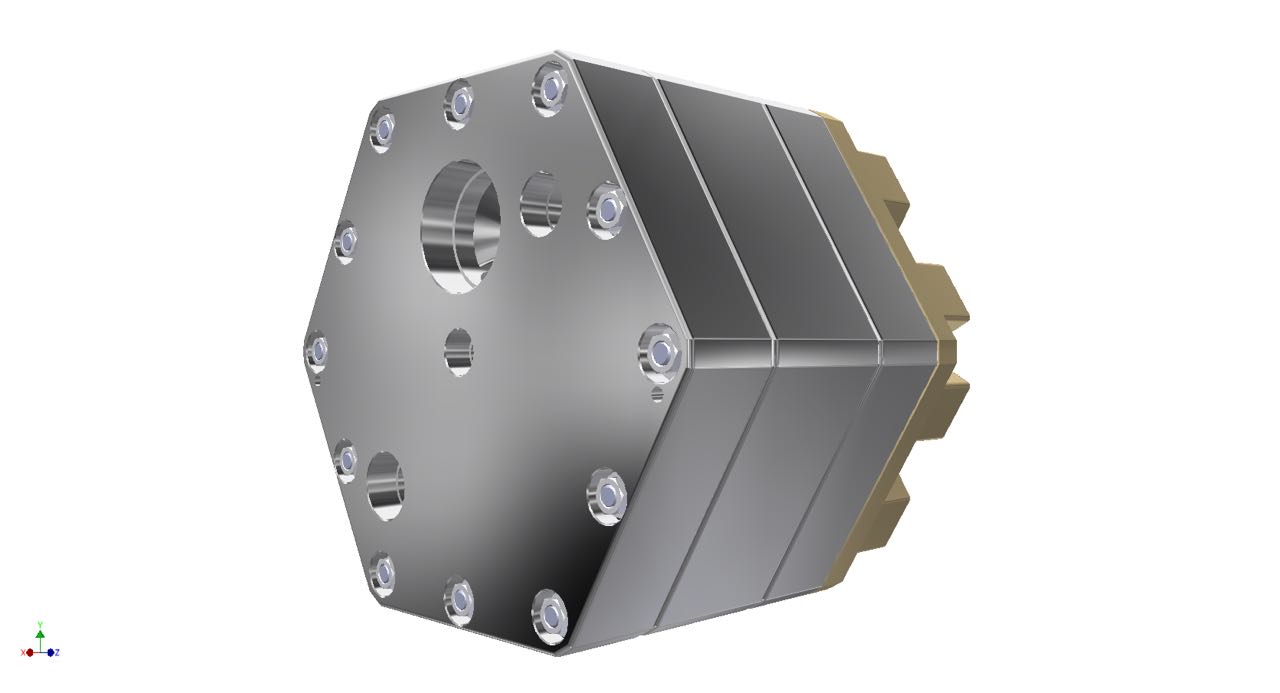
IT Modular Block |
Modular Fluid Handling Device: Infinity Turbine uses rapid prototyping and development using the patented Modular Block (National Science Foundation quoted as saying it’s an Industrial LEGO) allows fast deployment into the market.Modular Block Patented Fluid Handling Microfluidics Modular Block Heat Pump Turbine Experimenters Kit Modular Block Examples for Fluid and Gas Handling using 10 32 Fasteners Industrial Lego |

IT Modular Block |

IT10 Turbine 2010 Version |
| CONTACT Email: greg@infinityturbine.com | AMP | PDF |