
INFINITY TURBINE LLC We specialize in designs, plans, licensing, consulting, design services, and surplus spare parts. We no longer manufacture turbines or CO2 systems. More Info...
Please email for first contact with request for more information
Email: greg@infinityturbine.com
CO2 Ejectors for Data Center Waste Heat Cooling: A Technical Review Hyperscalers are racing to deploy gigawatts of AI compute, but the grid can't keep up and large gas turbines are backordered half a decade out. Infinity Turbine's Cluster Mesh Supercritical CO₂ system offers a radical alternative: modular, silent, trailer-deployable prime power that scales the way software does... More Info
From the Feher Cycle to the Cluster Mesh: A History of Supercritical CO₂ Power... More Info
Cooling a Data Center Pod with Its Own Waste Heat: A 100 kW Ejector Design Study More Info
Portable Gas Turbine Prime Power More Info
Cluster Mesh Supercritical CO2 Power System for Data Centers and AI Pairing Cluster Mesh Supercritical CO2 Power System with Small Modular Reactors enables hyperscalers to convert high-grade nuclear heat into ultra-efficient, dispatchable power with a compact, modular footprint tailored for AI-scale demand. More Info
ORC and Products Index Infinity Turbine ORC Index... More Info
AMD Helios Cooling Strategy Using Transcritical CO2 and a Cluster Mesh sCO2 Turbine Generator Cell More Info
|
|
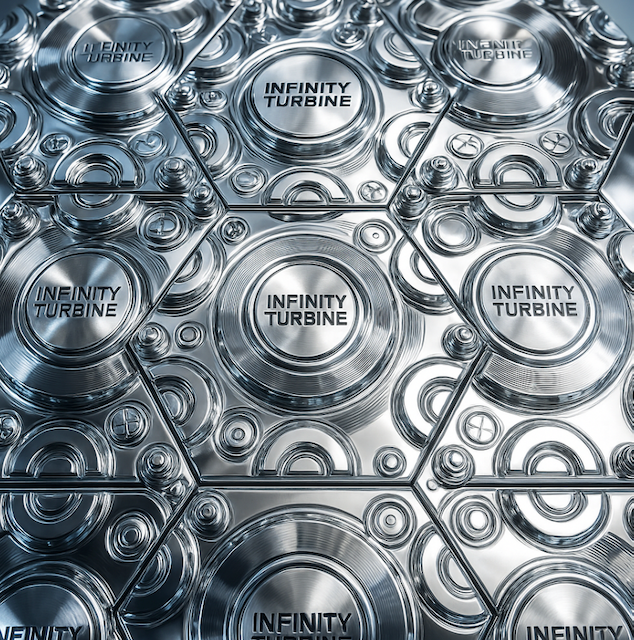
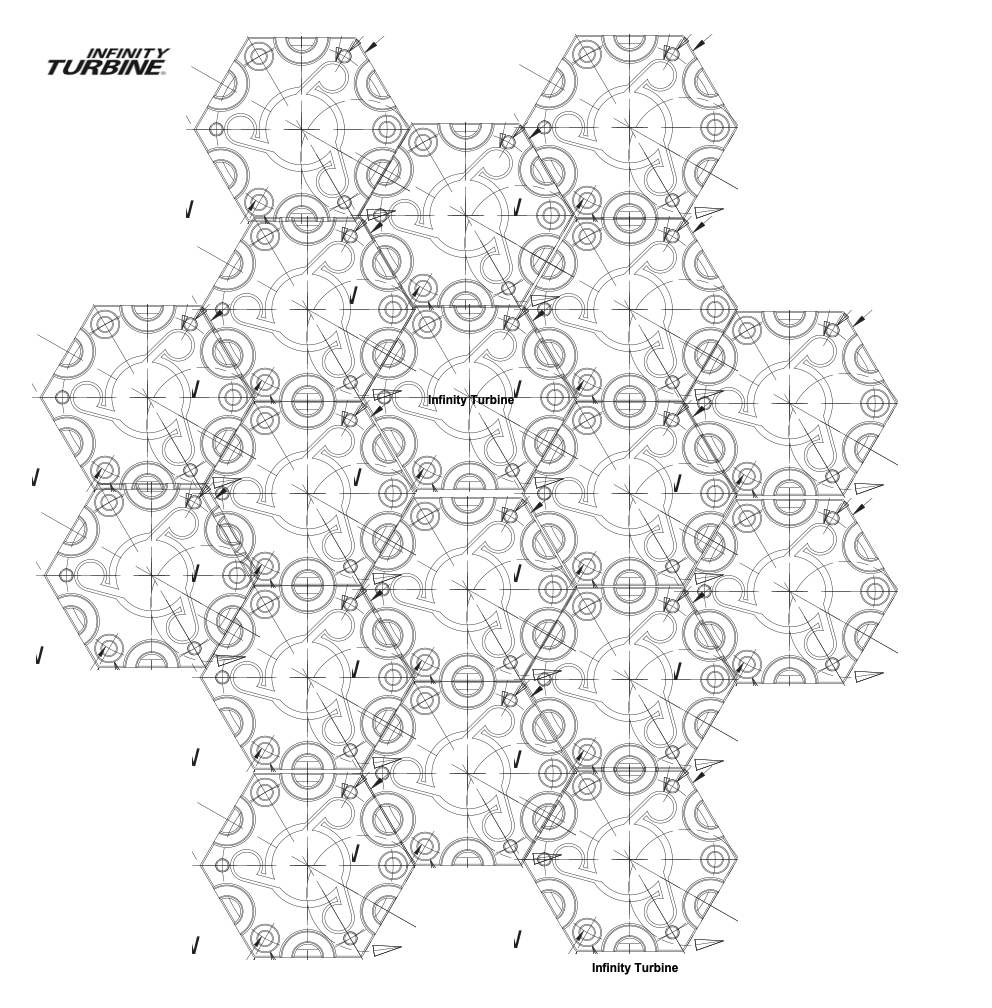
Infinity Turbine Cluster Mesh: A Generational Shift in Power Generation The Infinity Turbine Cluster Mesh concept represents a decisive move away from traditional single-unit Organic Rankine Cycle power blocks and toward a distributed Brayton Cycle architecture using supercritical CO2 as the working fluid. This transition is driven by a simple principle: smaller, simpler, faster-to-manufacture turbines can outperform large multi-megawatt machines when deployed as a coordinated network of modular units.Supercritical CO2 offers a significant advantage in both cost and energy density, making it ideal for compact turbine geometries and high-performance thermal conversion. By using miniature sCO2 turbines that can be machined quickly and economically, the system eliminates the need for large, expensive castings and complex assemblies. Each micro-turbine can either drive its own small generator or use axial layover rotors operating across copper coil stators, allowing vast arrays of power modules to be integrated inside a standardized container footprint.The Cluster Mesh architecture is designed for the evolving demands of AI data centers, remote industrial sites, and rapid-deployment microgrids. Instead of relying on a single large turbine with fixed capacity, the system scales by numbering up—adding more units as demand increases, enabling redundancy, resilience, and easy maintenance. Modules can be swapped, serviced, or upgraded without shutting down the entire system.This approach marks a structural transformation in how power is generated, distributed, and deployed. With lower manufacturing cost, higher thermal efficiency, and unprecedented modularity, the Infinity Turbine Cluster Mesh stands as a blueprint for the future of distributed, containerized, and data-centric energy infrastructure.
|
|
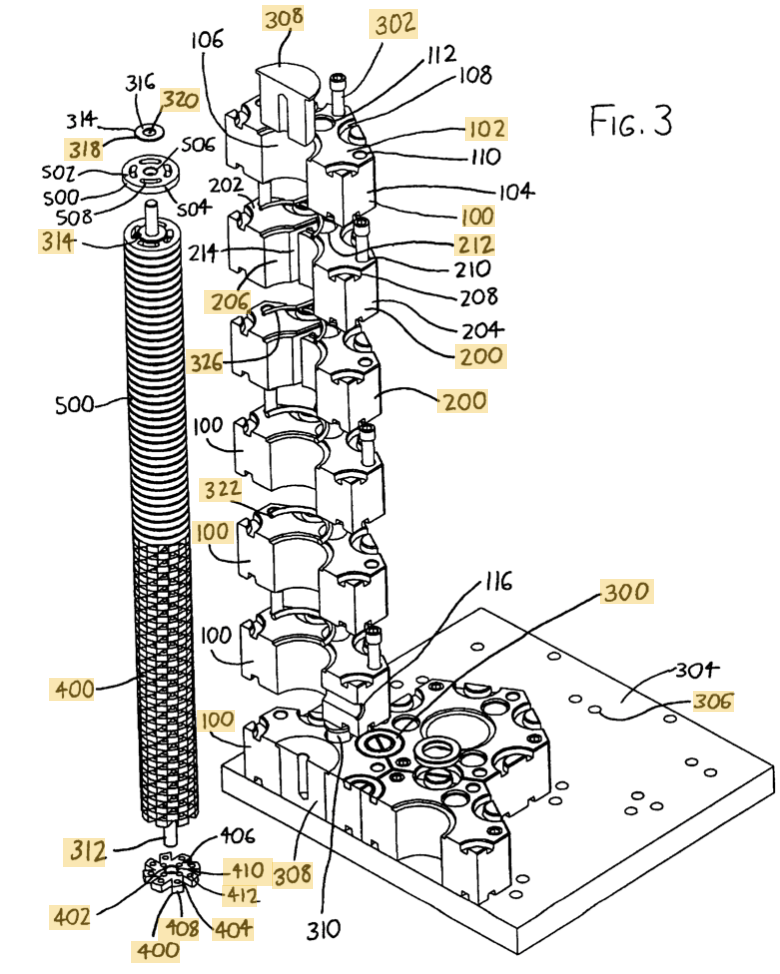
Infinity Turbine Patented Modular Energy Blocks Modular blocks designed for supercritical CO₂ power generation and cooling offer a practical alternative to traditional thermodynamic system construction. In both industrial and research environments, engineers frequently need to model or test components of Brayton, Rankine, refrigeration, or hybrid cycles. However, building one-off prototypes for these systems is typically slow, costly, and technically demanding. Conventional laboratory setups rely on a collection of vessels and stainless steel tubing to approximate a desired thermodynamic process, but these assemblies are fragile, difficult to pressurize, and unsuitable for high temperatures or reactive working fluids such as supercritical CO₂. More robust systems made from welded or brazed metal components can handle the conditions, but they require extensive fabrication time, specialized labor, and significant expense.The modular block system replaces this ad-hoc approach with compact, repeatable, high-pressure units capable of supporting full supercritical CO₂ operation. Each block integrates the functional elements needed for fluid and gas handling for heating, expansion, cooling, and pressure recovery, allowing researchers and developers to rapidly assemble, reconfigure, and scale complete Brayton-cycle or heat-pump architectures. By eliminating the fragility of extensive piping, and the fabrication burden of custom metal builds, these blocks provide a durable platform for prototyping and deployment while enabling applications that demand extreme temperatures, high pressures, and industrial-grade thermal performance. Using the cluster mesh concept, these blocks can be configured for numbering up and scaling up from prototype to commercialization and deployment in one stage. |
|
|

|
|
Why Does Legacy Development Fail ? The STEP turbine program has now cost upwards of $169 million for a working 3-4 MW supercritical CO2 design, but the ultimate goal is 10 MW.While the physical dimensions of this sCO2 turbine and generator is one tenth of legacy steam turbines, the cost and time of development make it a unicorn, or more likely a dinosaur.Key FactsThe Supercritical Transformational Electric Power (STEP) Demo pilot plant, located in San Antonio, Texas, has successfully completed Phase 1 testing of its next-generation indirect supercritical carbon dioxide (sCO₂) Brayton power cycle. The project is sized for a 10 MWe output and is funded at about US $169 million. For Phase 1, the system was operated in a simple cycle configuration (single compressor, turbine, recuperator, cooler) with heat supplied via a natural-gas-fired heater that mimics a duct-fired heat recovery steam generator. Performance in Phase 1: turbine achieved full speed (~27,000 rpm), inlet conditions of ~500 °C and ~250 bar, and produced ~4 MWe of grid-synchronized power.Breakthrough for sCO2 Power Cycle as STEP Demo Completes Phase 1 of 10-MW Project STEP Demo supercritical CO2 pilot plant generates electricity for the first time The 10-megawatt (MWe) Supercritical Transformational Electric Power (STEP) Demo pilot plant |
| CONTACT Email: greg@infinityturbine.com | AMP | PDF |