
INFINITY TURBINE LLC We specialize in designs, plans, licensing, consulting, design services, and surplus spare parts. We no longer manufacture turbines or CO2 systems. More Info...
Please email for first contact with request for more information
Email: greg@infinityturbine.com
CO2 Ejectors for Data Center Waste Heat Cooling: A Technical Review Hyperscalers are racing to deploy gigawatts of AI compute, but the grid can't keep up and large gas turbines are backordered half a decade out. Infinity Turbine's Cluster Mesh Supercritical CO₂ system offers a radical alternative: modular, silent, trailer-deployable prime power that scales the way software does... More Info
From the Feher Cycle to the Cluster Mesh: A History of Supercritical CO₂ Power... More Info
Cooling a Data Center Pod with Its Own Waste Heat: A 100 kW Ejector Design Study More Info
Portable Gas Turbine Prime Power More Info
Cluster Mesh Supercritical CO2 Power System for Data Centers and AI Pairing Cluster Mesh Supercritical CO2 Power System with Small Modular Reactors enables hyperscalers to convert high-grade nuclear heat into ultra-efficient, dispatchable power with a compact, modular footprint tailored for AI-scale demand. More Info
ORC and Products Index Infinity Turbine ORC Index... More Info
AMD Helios Cooling Strategy Using Transcritical CO2 and a Cluster Mesh sCO2 Turbine Generator Cell More Info
|
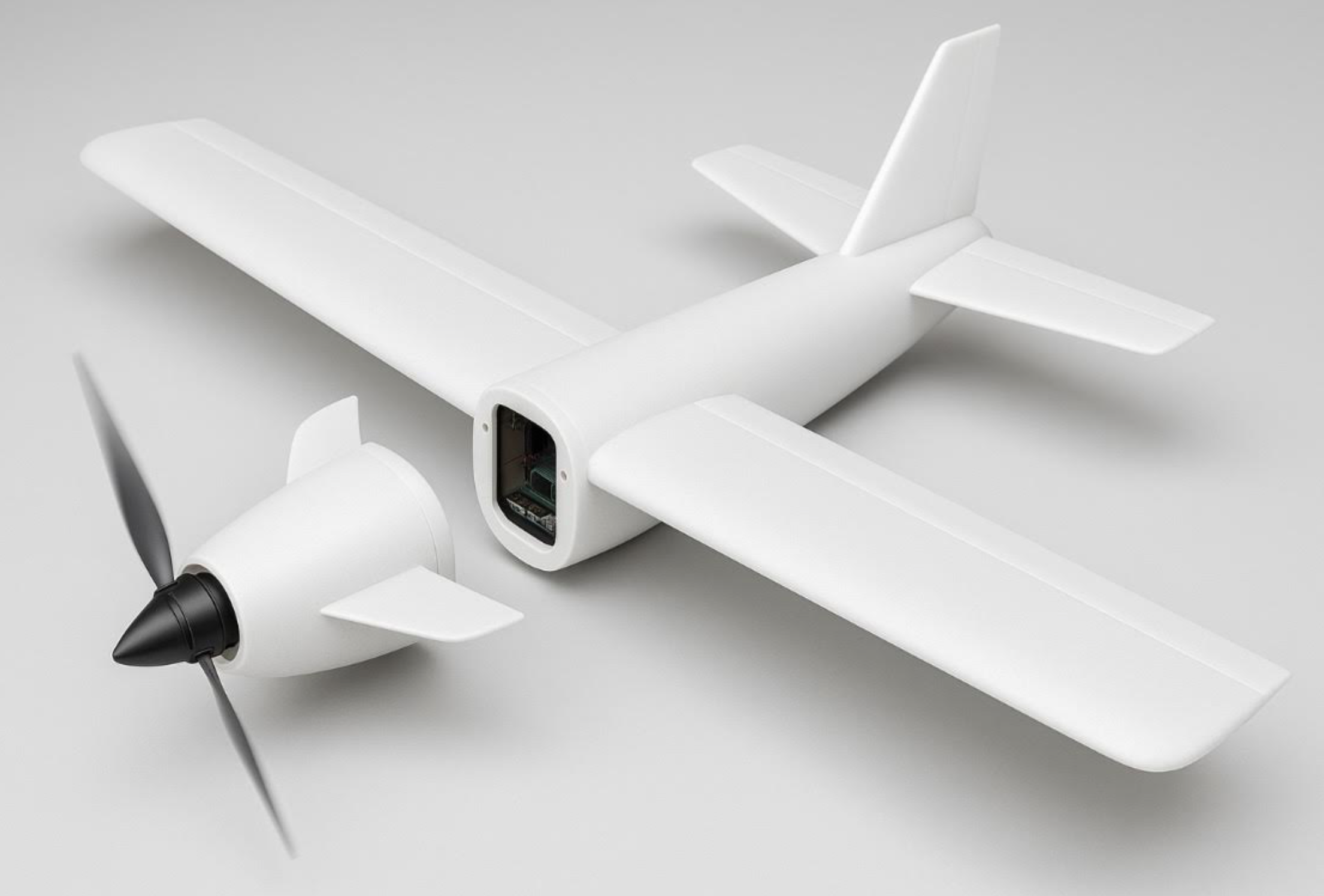
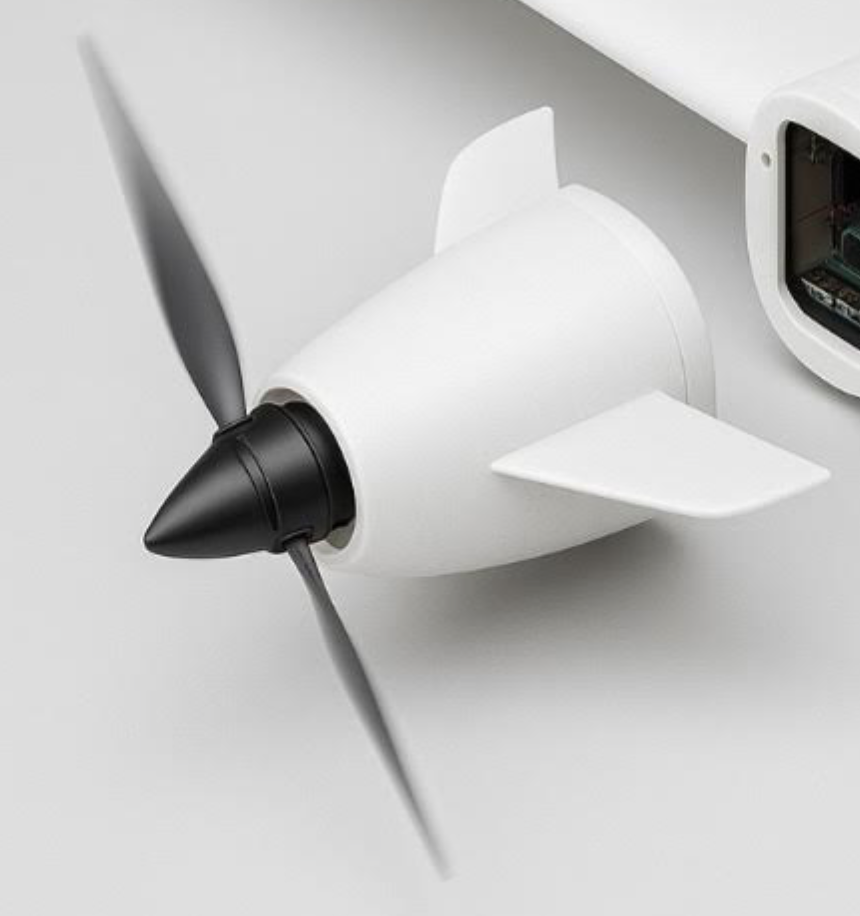
Modular Drone Innovation What if you could swap drone propulsion like plugging in a USB drive? A new modular concept reimagines drone design with a detachable nose cone unit—giving builders more freedom, faster development, and flexible flight configurations.
|
|
Modular Drone Innovation: The Detachable Propulsion Nose Concept As drone technology continues to advance, so does the demand for modular, customizable, and field-adaptable solutions. One emerging concept proposes a detachable nose cone system that contains the core propulsion and control architecture of the drone. This unique modular approach redefines how unmanned aerial vehicles (UAVs) can be designed, built, and deployed.The Concept: A Detachable Nose ConeAt the heart of this idea is a fully self-contained nose cone module that includes:Propulsion system: Either a traditional propeller, ducted fan, or even an electric turbofan.Control surfaces: A canard and fin for maneuvering and stability.Electronics: Embedded power distribution, flight control, telemetry, and navigation hardware.Mounting flexibility: Designed to attach to the front, rear, or even vertical orientation, allowing it to serve fixed-wing, VTOL, or hybrid platforms.This nose cone is the supplied component, and end-users or customers design and fabricate the fuselage, wings, and payload structure to suit their mission.Key Advantages1. Modularity for Custom BuildsCustomers can focus on designing the mission-specific structure—whether a long-endurance glider or a heavy-lift VTOL—while using a common propulsion unit that simply attaches to their design.2. Reduced Development TimeIntegrating propulsion and avionics into one pre-engineered unit eliminates the need for sourcing and integrating multiple subsystems, cutting prototyping time significantly.3. Flexible ConfigurationThe nose cone can be positioned:At the front for a pusher or tractor configurationAt the rear for rear-prop aircraftVertically for multicopter or hybrid VTOL designsThis allows for one propulsion module to power multiple drone classes and styles.4. Simplified Maintenance and UpgradesSwapping the nose module enables quick field repairs or propulsion upgrades without altering the airframe.Considerations and ChallengesStructural integration: Users must design a compatible fuselage interface with secure mechanical and electrical coupling.Aerodynamics: The fixed shape of the nose may not be optimal for all custom airframes.Thermal management: Proper airflow must be ensured around embedded electronics and motor systems.Power compatibility: A flexible but standardized power and data interface is required for broad applicability.Use Cases| Sector | Benefit of Modular Nose Design || -------------• | --------------------------------------------------• || Defense | Rapid reconfiguration for mission-specific payloads || Agriculture | Swappable platforms for different field conditions || Education/R\&D | Simplified prototyping for experimental designs || Delivery | Quick maintenance turnaround and fleet flexibility |ConclusionThe detachable propulsion nose cone concept presents a highly innovative and practical leap in modular drone design. By standardizing the most complex part of the aircraft—propulsion and avionics—while leaving structural design to the user, this system unlocks speed, flexibility, and creativity. Whether for military, research, commercial, or hobbyist applications, this approach could catalyze a new generation of adaptable UAV systems.
|
|
|
|
|
| CONTACT Email: greg@infinityturbine.com | AMP | PDF |