
|
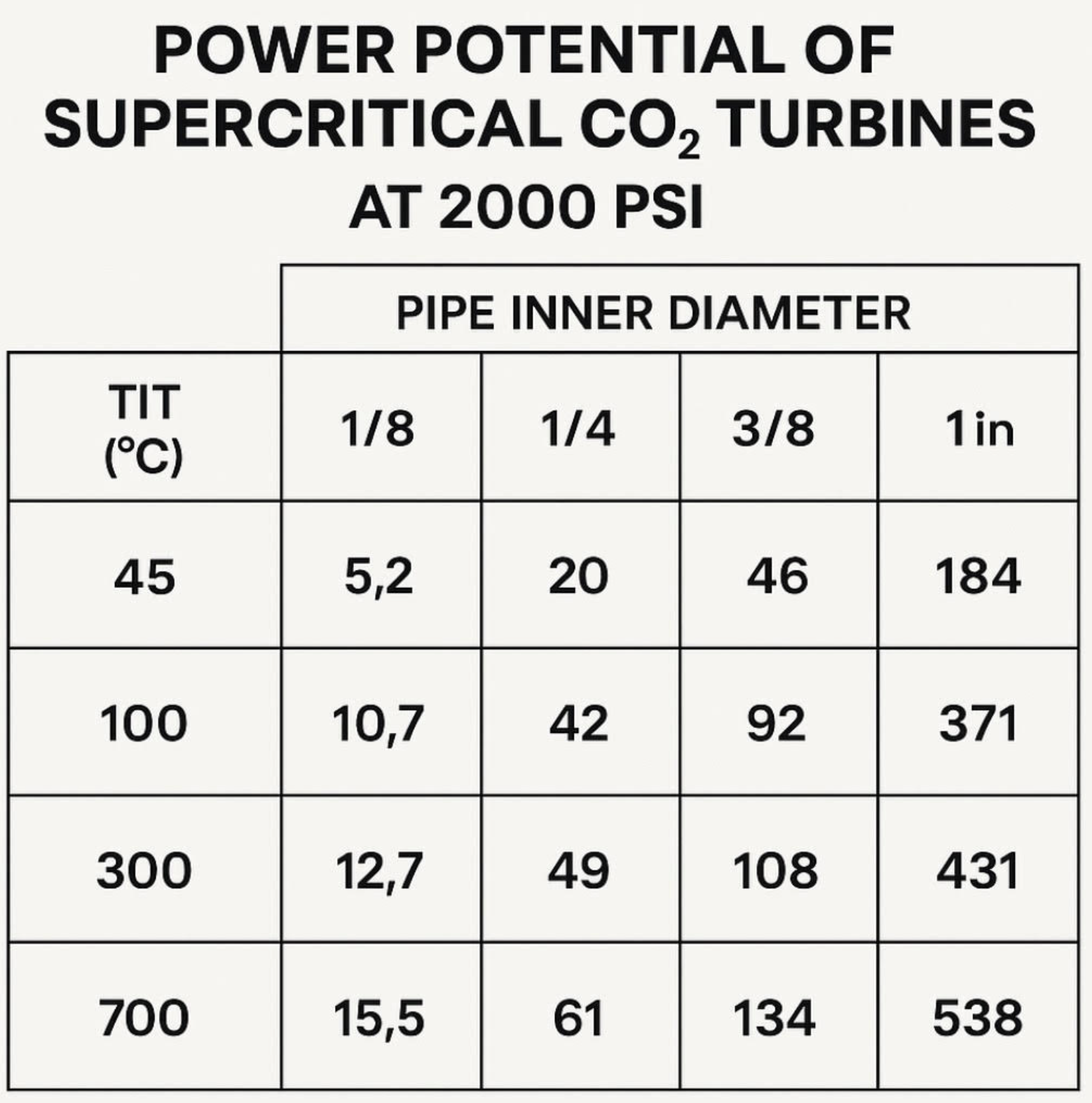
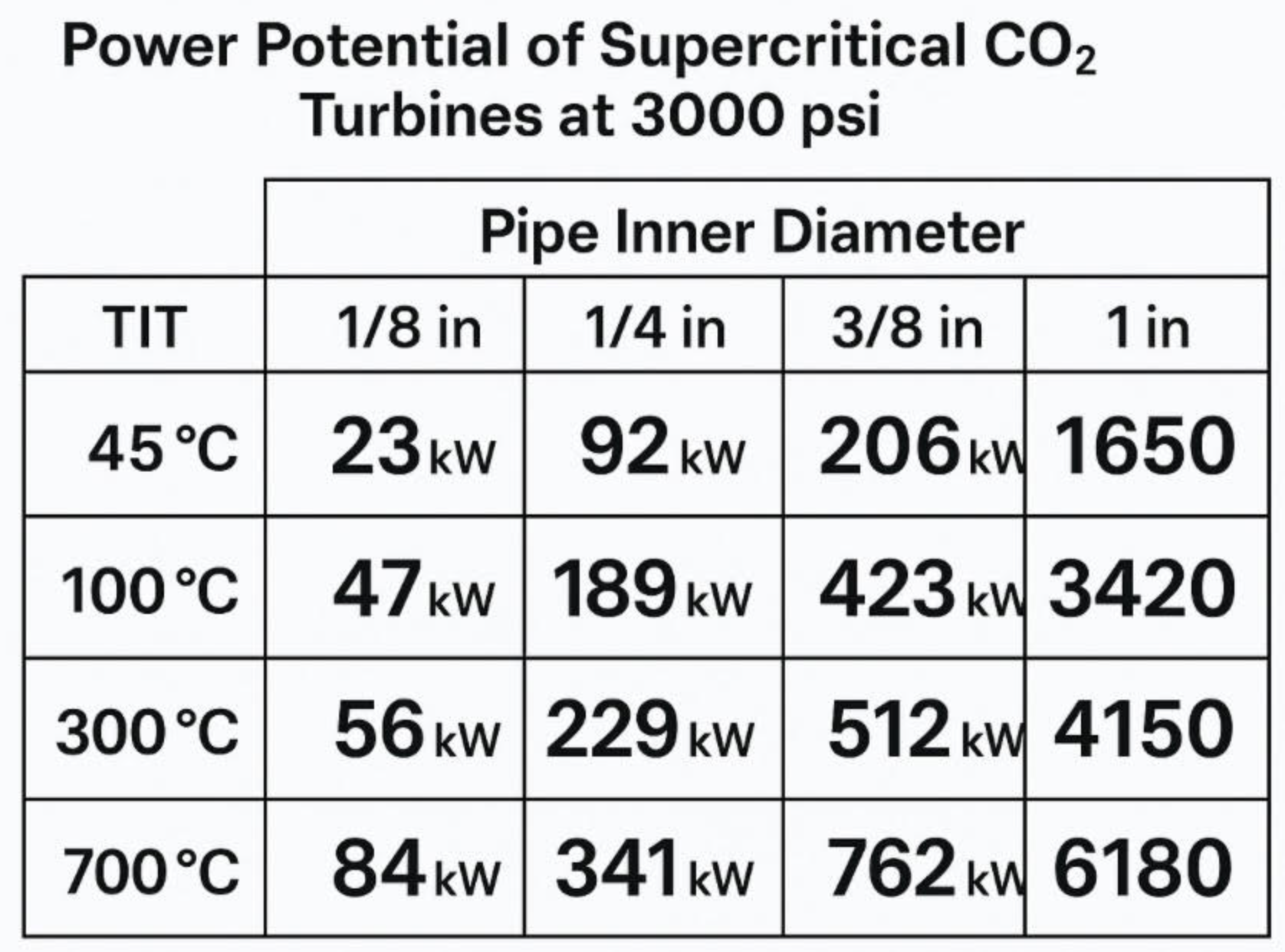
Power Potential of a One Inch Supercritical CO2 Feed for ORC and Brayton Cycles Scope and assumptionsThis is an upper bound, assumption driven sizing intended for a lab cart. Flow is limited by choked conditions at the smallest area, here taken as a smooth one inch inside diameter feed with a short, well contoured run into the test head. For comparability across temperatures, the outlet is assumed to be about one point zero MPa class back pressure. Ideal shaft power is reduced to a practical figure by applying a composite factor for turbine efficiency and header losses.Practical factors usedORC practical power equals about sixty percent of the ideal isentropic potential.Brayton practical power equals about fifty percent of the ideal potential, reflecting higher parasitics and generally smaller usable enthalpy drop at similar pressure ratios.Real systems will be heater limited long before they are line size limited. Treat these as ceilings for what the pipe could feed, not as what a small heater cart can actually deliver.Results at fifteen hundred psi inletOne inch feed at fifteen hundred psi with turbine inlet temperatures of forty five C, one hundred C, three hundred C, five hundred C, and seven hundred C.Organic Rankine Cycle practical powerForty five C about five hundred thirteen kilowatts, about six hundred eighty eight horsepowerOne hundred C about one thousand sixty six kilowatts, about one thousand four hundred thirty horsepowerThree hundred C about one thousand two hundred seventy five kilowatts, about one thousand seven hundred nine horsepowerFive hundred C about one thousand six hundred forty six kilowatts, about two thousand two hundred eight horsepowerSeven hundred C about one thousand nine hundred eight kilowatts, about two thousand five hundred forty horsepowerBrayton cycle practical powerForty five C about four hundred twenty eight kilowatts, about five hundred seventy four horsepowerOne hundred C about eight hundred eighty nine kilowatts, about one thousand one hundred ninety two horsepowerThree hundred C about one thousand sixty two kilowatts, about one thousand four hundred twenty five horsepowerFive hundred C about one thousand three hundred seventy two kilowatts, about one thousand eight hundred thirty horsepowerSeven hundred C about one thousand five hundred ninety kilowatts, about two thousand one hundred ninety horsepowerInterpretationAt the same pressure, hotter inlets produce larger per kilogram enthalpy drops, so practical power rises with temperature even though choked mass flow falls slightly at higher temperature. The ORC case trends higher than Brayton because the liquid return and lower exhaust conditions enable a deeper usable expansion and lower cycle parasitics on a small rig.Results at three thousand psi inletDoubling the inlet pressure approximately doubles the choked mass flow and, under the same outlet condition, roughly doubles ideal power potential. Applying the same practical factors gives the following ceilings for a one inch feed.Organic Rankine Cycle practical powerForty five C about one thousand twenty seven kilowatts, about one thousand three hundred seventy seven horsepowerOne hundred C about two thousand one hundred thirty three kilowatts, about two thousand eight hundred sixty horsepowerThree hundred C about two thousand five hundred forty nine kilowatts, about three thousand four hundred nineteen horsepowerFive hundred C about three thousand two hundred ninety three kilowatts, about four thousand four hundred nineteen horsepowerSeven hundred C about three thousand eight hundred fifteen kilowatts, about five thousand one hundred fifty horsepowerBrayton cycle practical powerForty five C about eight hundred fifty five kilowatts, about one thousand one hundred forty seven horsepowerOne hundred C about one thousand seven hundred seventy seven kilowatts, about two thousand three hundred eighty three horsepowerThree hundred C about two thousand one hundred twenty five kilowatts, about two thousand eight hundred forty nine horsepowerFive hundred C about two thousand seven hundred forty four kilowatts, about three thousand six hundred forty horsepowerSeven hundred C about three thousand one hundred seventy nine kilowatts, about four thousand two hundred thirty six horsepowerInterpretationAt three thousand psi, both cycles show roughly double the cart ceiling relative to fifteen hundred psi. In practice, compressor or pump power, heater duty, recuperator sizing, and allowable shaft speed will set much lower operating points for a benchtop system.Practical reality checks for a lab cartHeater duty dominates. Even a ten kilowatt or twenty kilowatt electric heater is orders of magnitude below the pipe ceiling shown above. Expect to operate at a small fraction of these numbers on a real cart while you optimize nozzles, bearings, seals, and recuperation. Pressure drop in valves, bends, and compact heat exchangers will further reduce the admissible mass flow before the nozzle. Use a short, straight, fully heated run into a defined nozzle so that choking occurs where you intend it. Instrument total pressure and total temperature at the nozzle plane if you want credible turbine efficiency numbers. For Brayton operation, plan additional electrical power for the compressor and consider a larger inventory tank at higher turbine inlet temperatures to keep the compressor in a stable map.ConclusionA one inch inside diameter supercritical CO2 feed sets a very high theoretical ceiling for both Organic Rankine Cycle and Brayton cycle experiments. At fifteen hundred psi, practical ORC power ranges from roughly five hundred kilowatts near forty five C to roughly one thousand nine hundred kilowatts near seven hundred C, while Brayton practical power ranges from roughly four hundred kilowatts to roughly one thousand five hundred ninety kilowatts across the same temperature span. At three thousand psi, these practical ceilings are roughly doubled. These figures represent what the pipe could admit with ideal upstream conditioning and are not prescriptions for a small heater cart. Use them to bracket your component sizing and then back solve to the heater capacity and rotor limits you can realistically support on the bench. |
|
|
| CONTACT Email: greg@infinityturbine.com | AMP | PDF |